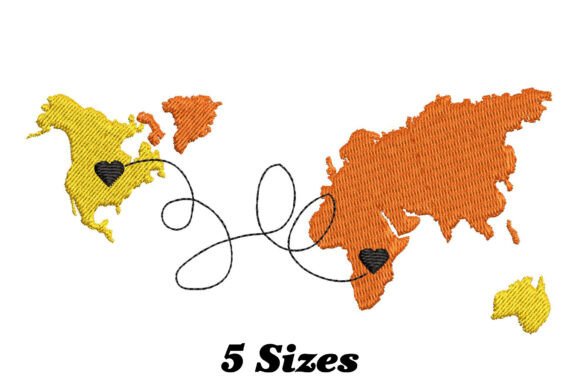
World Map Long Distance: A Craft Fair Review
As an experienced embroidery designer preparing for a busy weekend craft fair, I approach every new machine embroidery design with a critical eye. It is not enough for a file to simply stitch out correctly on screen; it must translate into a profitable craft fair product that catches the attention of shoppers walking past my booth. When evaluating the World Map Long Distance design, I am looking for versatility, visual clarity, and that specific emotional hook that turns a browser into a buyer. This review breaks down how this specific embroidery file performs in a real-world commercial setting, specifically for sellers targeting school communities, travelers, and long-distance families.
First Impressions: Modern Sentiment Meets Quirky Charm
The title "World Map Long Distance" immediately suggests a narrative. In the handmade market, products that tell a story consistently outsell generic decor. My first impression of this design is that it strikes a balance between educational geography and sentimental connection. It feels modern and slightly quirky rather than stiff or overly academic. While categorized under School, the aesthetic leans more toward contemporary lifestyle decor, making it suitable for a wider demographic than just students or teachers.
For a booth display, this design reads as "connected" and "thoughtful." It lacks the heaviness of traditional cartography, suggesting a lighter stitch count that is ideal for apparel and lightweight goods. The description promises a fun accent, and visually, this implies clean lines and recognizable continents without overwhelming density. For an Etsy seller or boutique maker, this mood is crucial because it bridges the gap between a novelty item and a cherished keepsake. It is bold enough to be seen from three feet away at a market table but detailed enough to reward closer inspection.
Top Performing Products for Market Sales
Not every design works on every substrate. Based on the "long distance" theme and the quirky charm mentioned in the product details, I have identified specific high-potential applications for World Map Long Distance. These are the items I would prioritize for batch production before a fair.
- Tote Bag Design: Canvas totes are the quintessential handmade product for markets. This map design serves as an excellent focal point on natural cotton canvas. The contrast of dark thread on unbleached fabric highlights the geographical details while reinforcing the eco-friendly, worldly vibe that tote buyers love.
- Tea Towel Embroidery: Kitchen linens are high-volume sellers. Because this design adds a "fun and quirky accent," it transforms a utilitarian towel into a conversation piece. This is particularly effective for gifts meant for friends or family living abroad, making it a strong seasonal seller during graduation or holiday markets.
- Apron Embroidery: For school events, teacher appreciation gifts, or culinary enthusiasts, an apron featuring this map creates instant personalization. The placement should be chest-high or lower-left to ensure visibility when worn.
- Embroidered Patch: If you have cap space or want to create add-on sales, digitizing or resizing this into a patch format is smart. Patches allow customers to customize their own gear without committing to a full embroidered item, lowering the barrier to entry at your booth.
Production Practicality and Booth Display Strategy
A design might look beautiful digitally, but as a business owner, I need to know if it is efficient to produce. World Map Long Distance appears to be a design that respects production time. Maps can sometimes be stitch-heavy nightmares, but the "quirky" descriptor suggests stylized outlines or fill patterns that are faster to run than photorealistic satins. This efficiency is vital for maintaining profit margins on small shop product lines.
From a display perspective, this design photographs exceptionally well for printable mockup listings and social media teasers leading up to the fair. The recognizable shape of the world map acts as a visual anchor in thumbnails. In person, I would display this design on varying background colors to demonstrate its versatility. Because it appeals to the "School" category, creating a sample specifically for a backpack or pencil case could capture the back-to-school crowd, while a pillow cover sample targets the home decor buyer. This dual appeal maximizes the ROI of a single digital embroidery file.
Critical Use Notes for Professional Results
Despite its charm, map designs present unique technical challenges. Before running World Map Long Distance on saleable inventory, consider these constraints:
- Fabric Texture: Maps often contain small text or intricate border lines. On textured towels or nubby linen, these details can get lost. Always use a water-soluble topping to keep stitches crisp and legible.
- Stitch Density: Check the fill areas. If the continents are solid satin fills, they may pucker lightweight t-shirts. Verify if the design uses tatami or motif fills which are more forgiving on stretchy knits.
- Small Lettering: If the design includes country names or coordinates, test the minimum readable size. Text below 4mm often becomes illegible after washing. You may need to edit the file to remove micro-text for smaller hoop sizes.
- Curved Surfaces: Stitching a flat map onto a curved cap can distort the geography. Use a specialized cap hoop and consider simplifying the design elements near the edges to prevent registration issues.
Designer Checklist: Ensuring Commercial Viability
To protect your brand reputation and ensure customer satisfaction, treat World Map Long Distance with the same rigor as any commercial embroidery asset. Do not assume the file is perfect straight out of the download. Follow this pre-production protocol:
- Verify Licensing: Before selling finished goods, confirm the license terms included with the file. Ensure you have the right to sell physical products embroidered with this specific design.
- Test Stitch-Out: Never skip the test run. Use scrap fabric that matches the weight and weave of your intended finished product. Inspect for thread breaks, puckering, or alignment gaps.
- Check Hoop Size Compatibility: Confirm the design dimensions fit your machine’s hoops without requiring excessive re-hooping. Multi-hoop maps are risky for craft fairs due to alignment complexity; single-hoop versions are safer for volume production.
- Evaluate Thread Colors: The default palette may not match your brand. Swap threads to match your shop’s aesthetic. For example, using navy and cream instead of bright primary colors can elevate the perceived value for a boutique audience.
- Stabilizer Selection: Match the stabilizer to the fabric, not just the design. A tear-away might suffice for canvas totes, but a cut-away is likely necessary for t-shirts to prevent distortion over time.
- Create Real Mockups: Photograph actual stitched samples rather than relying solely on digital renders. Customers at craft fairs and online want to see real stitch density and texture. Authentic photos build trust and justify premium pricing.
Final Verdict for Handmade Entrepreneurs
World Map Long Distance is a strong contender for makers who serve niche communities centered around education, travel, and connection. Its strength lies in its emotional resonance; it is not just a map, but a symbol of relationships spanning distances. For the Etsy seller or craft fair vendor, this translates to higher engagement because customers are buying a feeling, not just thread on fabric.
However, success depends entirely on execution. By respecting the technical requirements of map embroidery and strategically applying this design to high-margin items like totes and tea towels, you can turn this design assets into a reliable revenue stream. Remember to always validate your specific file details regarding stitch counts and formats before production, as these vary by digitizer. With careful testing and thoughtful product selection, World Map Long Distance can become a signature piece in your handmade collection, offering both creative satisfaction and commercial viability.