Teacher Sunflower Wreath: A Designer’s Stitch Review
As an embroidery designer who has digitized and tested countless school-themed assets, I approach every new machine embroidery design with a healthy dose of skepticism. We have all downloaded files that look perfect on screen but turn into thread nests or distorted shapes once the needle hits the fabric. When evaluating the Teacher Sunflower Wreath for real-world application, my primary focus is not just its aesthetic charm, but its structural integrity and versatility across different substrates. This review breaks down how this specific embroidery file performs when moved from the digital workspace to actual production, specifically for makers and small business owners targeting the education market.
First Impressions and Visual Personality
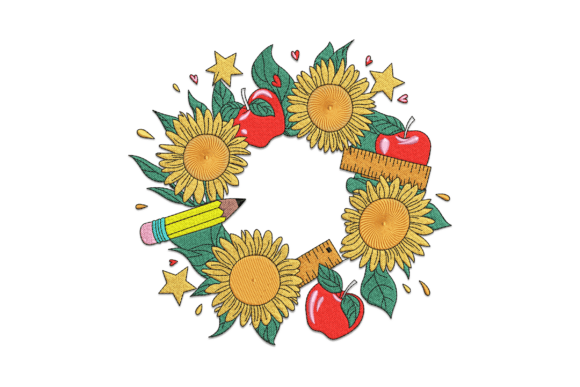
The immediate appeal of the Teacher Sunflower Wreath lies in its balanced composition. In the School category, designs often lean toward cartoonish clip art or overly rigid crests. This wreath strikes a necessary middle ground, offering a botanical softness that feels mature yet approachable. The circular layout is inherently pleasing to the eye and provides a natural frame for personalization, which is critical for custom apparel and personalized gift markets. Visually, the sunflowers suggest warmth and gratitude, making it emotionally resonant for teacher appreciation gifts without being cliché.
From a technical design perspective, the wreath format is forgiving. Unlike linear text or complex scenic landscapes, a circular motif hides minor registration shifts more effectively. However, the success of this Embroidery piece depends entirely on how the petals and leaves are rendered. If the design relies too heavily on dense satin stitch borders without adequate underlay, you risk puckering on lighter fabrics. Conversely, if it uses only running stitch for definition, it may lack the visual weight needed for items like sweatshirts or tote bags. My initial assessment suggests this design aims for a mixed-media stitch style, likely combining fill stitches for petal volume with satin outlines for definition, which is ideal for maintaining detail without excessive density.
Real-World Application: The Teacher Tote Test
To truly evaluate this asset, I mentally placed it in a specific production scenario: creating a batch of canvas tote bags for a PTA fundraiser. Canvas is a textured, unforgiving fabric that demands a robust stitch density. For this project, the Teacher Sunflower Wreath needs to hold its own against the coarse weave of the bag.
In this context, the wreath serves as an excellent central anchor. Because tote bags are functional items subject to wear, the design must be durable. If the sunflower centers utilize intricate detailing or tiny lettering, they might get lost in the canvas texture or degrade after washing. As a reviewer, I would recommend testing the digital embroidery file on a scrap of similar weight canvas first. If the design includes an applique option for the petals, this would be the superior choice for tote bags, reducing stitch count and adding a tactile, handmade quality that customers value. If it is purely stitched, ensuring the fill stitch direction follows the natural curve of the petals will prevent the design from looking flat or mechanical.
For Etsy seller listings, this wreath translates beautifully to mockups. The circular shape fits perfectly within social media squares and listing thumbnails. However, do not rely solely on software-generated previews. Stitching out a sample on a tea towel or apron allows you to photograph the actual thread sheen and texture, building trust with buyers who want to see the finished product before purchasing.
Navigating Fabric Limitations and Hoop Constraints
While the Teacher Sunflower Wreath is versatile, it requires careful consideration regarding substrate selection. Not all fabrics are created equal, and this design will behave differently across materials.
- Stretchy Knits and Baby Clothes: If applying this to t-shirts or baby onesies, stabilization is non-negotiable. Floral wreaths often have organic, reaching elements that can distort if the fabric stretches during hooping. Use a high-quality cut-away stabilizer rather than tear-away to maintain the circle's roundness after laundering.
- Dark Fabrics: Sunflowers typically involve yellows, browns, and greens. On dark navy or black sweatshirts, ensure the design includes sufficient contrast or a light-colored outline. Without this, yellow thread can disappear visually against dark backgrounds, diminishing the impact of the sweatshirt embroidery.
- Textured Home Decor: For kitchen towels or pillow covers, verify that the smallest details in the wreath are large enough to stitch clearly. Linen and terry cloth can swallow fine lines. If the design features delicate stems or tiny leaves, consider scaling up slightly or simplifying the color palette to ensure readability.
- Hoop Size Awareness: Always confirm your machine’s maximum stitching area before committing. Wreaths can be deceiving; they may fit in a 4x4 hoop visually but require a larger field for proper margin clearance. Check the specific dimensions of this embroidery project file to avoid mid-stitch errors.
Commercial Viability and Brand Consistency
For those running a craft business or selling design assets, consistency is key. The Teacher Sunflower Wreath works best as part of a cohesive collection. It pairs naturally with script fonts for teacher names or block letters for school mascots. When using this for commercial embroidery, consider how it scales. Does it look as good on a pocket-sized patch as it does on a full-back jacket? A well-digitized wreath should retain its character at multiple sizes, though you may need to adjust thread colors or remove small details for the smallest variations.
Customer perception is directly tied to stitch quality. A clean, professional execution of this wreath signals that your shop cares about details. If you are selling the digital embroidery file itself, provide clear notes on recommended stabilizers and fabric types. This reduces customer support queries and returns. For physical products, this design adds perceived value because florals are timeless; unlike trendy memes that expire quickly, a sunflower wreath remains sellable year-round, particularly during back-to-school season and end-of-year celebrations.
Essential Pre-Stitch Checklist for Makers
Before loading this design into your machine for a client order or inventory stock, run through this practical checklist to ensure professional results:
- Verify Licensing: Confirm whether the license permits commercial use of finished goods, digital resale, or both. Never assume rights based on the product description alone.
- Test Stitch Out: Always stitch on a fabric swatch that matches your final project. Check for gaps between outline and fill, and ensure the wreath closes seamlessly at the join point.
- Contrast Check: View the design in grayscale or black and white on your computer. If the values are too similar, change thread colors to improve visibility and depth.
- Stabilizer Match: Select stabilizer based on fabric weight and drape, not just design size. Heavier floral designs on light fabric need stronger support than simple line art.
- Mockup Validation: Create a printable mockup or photo composite to visualize placement. Ensure the wreath sits correctly relative to seams, pockets, or necklines.
- Wash Test: If selling baby items or apparel, wash and dry the test piece. Inspect for shrinkage, thread breakage, or distortion before listing the item.
The Teacher Sunflower Wreath offers significant potential for handmade product creators, provided it is treated with technical respect. Its success lies not just in the digital artwork, but in the maker's understanding of how thread interacts with fabric. By validating the stitch density, respecting fabric limitations, and presenting the design professionally, you transform a simple digital file into a cherished keepsake or a best-selling boutique item. Whether you are embellishing a holiday gift or stocking your Etsy shop, let practical testing guide your creative decisions.