Pencil and Apple: A Designer Review for Business Merch
As a professional embroidery designer, I approach every new machine embroidery design with a critical eye toward commercial viability. When evaluating the "Pencil and Apple" motif for small business merchandise, my focus shifts immediately from simple aesthetics to production reliability and brand application. While the product description suggests giving fabrics a charming update for t-shirts and home decor, experienced embroiderers know that a design’s true value lies in its versatility across different substrates and business contexts. This review analyzes how this specific embroidery file performs when adapted for branded patches, staff uniforms, and retail merchandise.
Visual Personality and Brand Identity Alignment
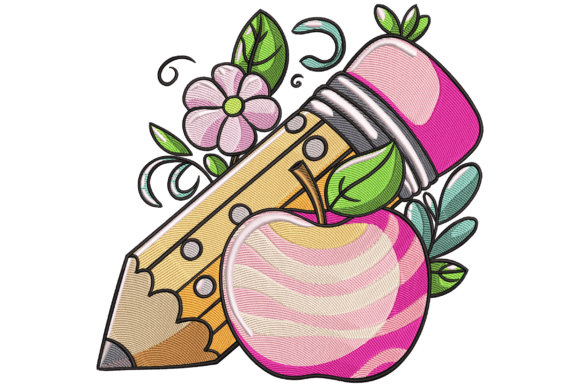
The first impression of Pencil and Apple is undeniably friendly and accessible. In the context of brand identity, this imagery communicates education, creativity, nostalgia, and wholesome values. For a small business, these associations are powerful. However, the "quirky flair" mentioned in the description must be balanced against professional presentation. If you are a creative studio, tutoring center, children’s boutique, or artisanal bakery, this design aligns perfectly with a handmade, approachable aesthetic. It signals to customers that your business values tradition and personal touch.
Conversely, if your brand leans toward ultra-modern minimalism or corporate tech, this design might feel too rustic unless stylized appropriately during digitization. As a designer, I look for clean lines and distinct separation between elements. The apple should have enough negative space or color blocking to remain recognizable at smaller sizes, while the pencil needs sufficient width to prevent the satin stitches from tunneling. A successful finished product relies on this visual clarity; if the design looks muddy on screen, it will look worse on fabric.
Commercial Applications Beyond Basic Apparel
While t-shirts and towels are standard applications, small business owners need design assets that work harder. Pencil and Apple has significant potential for small business merch that drives revenue and recognition. Consider the following commercial applications:
- Embroidered Patch Production: This motif is ideal for creating morale patches or branded badges. Because pencils and apples generally have defined outlines, they translate well to merrowed-edge patches. Ensure the digitizing includes a proper border stitch and adequate underlay to support the patch material.
- Apron Embroidery: For cafes, florists, or craft workshops, aprons are prime real estate. Placing Pencil and Apple on the chest pocket area creates an instant uniform look without the cost of custom screen printing. The design adds personality to functional workwear.
- Tote Bag Design: Canvas totes are high-margin items for Etsy sellers and local shops. This design provides a focal point that appeals to teachers, students, and parents. On unstructured canvas, ensure you use a heavy-duty stabilizer to prevent puckering around the dense fill areas of the apple.
- Cap Embroidery: Headwear presents unique challenges due to curvature. If using Pencil and Apple for caps, verify that the design height does not exceed your machine’s cap frame limits and that the lettering (if any) is large enough to register clearly on a curved surface.
- Product Packaging Accents: Use this design on reusable packaging bags or cloth tags attached to handmade product sales. It elevates the unboxing experience and reinforces the school or learning theme associated with your niche.
Technical Constraints and Production Warnings
A charming design can quickly become a production nightmare if technical limitations are ignored. When reviewing Pencil and Apple for commercial embroidery, pay close attention to these risk factors:
Stitch Density and Fabric Texture
The interplay between stitch density and fabric texture is critical. Apples often require solid fill stitches, which can be dense. If you are embroidering on lightweight knits or performance wear, excessive density will cause distortion or holes. Conversely, on textured fabrics like terry cloth towels, the details of the pencil tip may get lost. Always test the design on the exact substrate you intend to sell. You may need to add a water-soluble topping for textured goods or reduce density for delicate apparel.
Sizing Limitations for Small Details
Business owners often want logos as small as possible to act as subtle accents. However, resizing Pencil and Apple down to a 1-inch patch size requires caution. Thin pencil shafts and small leaf details may turn into thread nests if reduced below the minimum recommended size. Before committing to bulk production of tiny labels or sleeve cuffs, run a sew-out at the intended final size. If details vanish, consider simplifying the design specifically for small-format use rather than forcing a resize.
Thread Colors and Contrast
Review your thread colors against the garment color. A red apple on a maroon shirt lacks contrast and visibility. For custom apparel, high contrast ensures the design reads quickly from a distance. Also, consider thread sheen; rayon offers vibrancy for decorative pieces, while polyester provides durability for staff uniforms and aprons that face frequent industrial washing.
Strategic Implementation for Business Growth
Integrating Pencil and Apple into your product line affects more than just inventory; it influences customer perception. Consistent use of this motif across digital embroidery file projects builds visual familiarity. When customers see the same quality embroidery on your staff aprons, tote bags, and packaging, it establishes trust and professionalism. It transforms a generic item into a branded asset.
For Etsy sellers and digital creators, this design serves as excellent content for a printable mockup. High-quality mockups allow you to sell the concept before stitching physical inventory. However, always disclose that the mockup represents the Pencil and Apple design accurately. Misleading representations damage buyer engagement and lead to returns. Furthermore, using this design in your marketing materials helps target specific niches, such as back-to-school seasons or teacher appreciation events, maximizing seasonal relevance.
Essential Pre-Production Checklist
Before loading the embroidery file for a client order or stock production, complete this professional verification process:
- Verify Commercial Licensing: Confirm that your purchase of Pencil and Apple includes rights for selling finished embroidered goods. Never assume a personal-use license covers business merchandise.
- Check Hoop Size Compatibility: Ensure the design dimensions fit within your available hoops with adequate margin for movement. Tight hooping causes registration errors.
- Test in Black and White: Stitch a grayscale version first. This reveals whether the design relies solely on color contrast or if the underlying stitch structure provides necessary definition.
- Evaluate Stabilizer Pairing: Match the backing to the fabric weight. Cutaway for stretchy knits, tear-away for stable wovens, and adhesive spray for hard-to-hoop items like caps or bag straps.
- Create Client Approval Mockups: If doing contract work, generate a visual proof showing Pencil and Apple on the actual garment style. Get written sign-off on placement and size to avoid costly rework.
- Inspect Spacing and Jump Stitches: Review the digitizing path. Excessive jump stitches increase trimming time and production costs. Optimize the file if necessary to improve workflow efficiency.
Pencil and Apple offers a delightful opportunity to enhance small business merch with warmth and character. By treating it as a professional asset rather than just a cute graphic, and by adhering to strict production standards regarding density, sizing, and fabric compatibility, you can create embroidered products that resonate with customers and withstand the rigors of daily use. Always validate your specific file parameters against the manufacturer's specifications, as stitch counts and formats vary, but apply these universal design principles to ensure your branded embroidery consistently delivers quality and value.