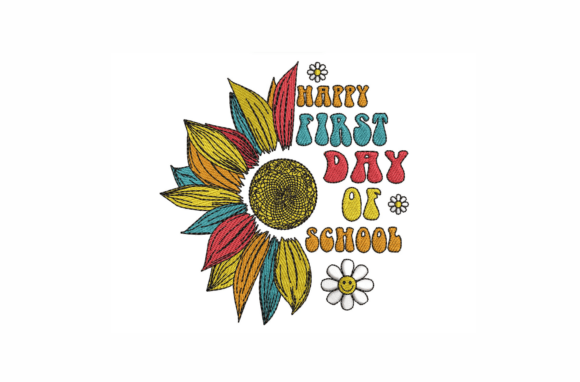
My First Day of School: A Merch Design Review
As an embroidery designer who specializes in commercial branding and small business merchandise, I approach every new machine embroidery design with a critical eye toward production viability. When evaluating the "My First Day of School" sunflower and retro lettering design for business applications, my focus shifts from simple aesthetics to functional versatility. While the title suggests a personal milestone, the visual components—a vibrant sunflower motif paired with retro typography—offer significant potential for creative studios, florists, bakeries, and handmade brands looking to expand their brand identity. This review analyzes how this specific digital embroidery file performs when adapted for professional use, moving beyond the nursery to serve as a robust asset for small business merch.
Visual Personality and Commercial Adaptability
The first impression of "My First Day of School" is undeniably warm, nostalgic, and handcrafted. For a business owner, these traits translate directly into customer trust and approachability. The retro lettering provides a vintage aesthetic that is currently trending in boutique markets, while the sunflower element offers a universal symbol of positivity and growth. From a design perspective, this combination feels less like a rigid corporate logo and more like a lifestyle brand mark.
For businesses such as local florists, organic bakeries, or pet grooming salons, this design bridges the gap between playful and professional. It avoids the sterile look of standard corporate wear, making it ideal for businesses that want to emphasize a handmade product ethos. However, because the design includes intricate floral details alongside text, it requires careful consideration regarding scale. The retro font likely contains varying stroke widths, which can be a challenge if resized too aggressively. As a designer, I see this as a premium accent piece rather than a high-volume utility logo. It communicates care and attention to detail, qualities that justify higher price points in custom apparel and accessories.
Real-World Applications for Small Business Merch
When integrating "My First Day of School" into a commercial product line, versatility is key. Based on the three included sizes, here is how I would deploy this design across different merchandise categories:
- Apron Embroidery: For cafes and florists, the largest size works beautifully as a center chest placement on canvas aprons. The sunflower adds color to utilitarian garments, turning staff uniforms into walking advertisements for the shop’s aesthetic.
- Tote Bag Design: Canvas totes are a staple for retail branding. This design centers well on natural cotton bags. The retro lettering contrasts effectively against unbleached fabric, creating a reusable shopping bag that customers actually want to carry.
- Embroidered Patch: Using the smallest size, this artwork can be converted into a merrowed-edge patch. These are excellent add-on sales items for Etsy sellers or as branded packaging accents for shipping boxes. Patches allow customers to buy into the brand without committing to a full garment.
- Cap Embroidery: If the digitizing supports curved surfaces, the medium size could work on dad hats or trucker caps. This is particularly relevant for outdoor markets or garden centers where staff need sun protection while maintaining brand visibility.
- Sleeve Details: For a subtle branding touch on work shirts, consider placing the smallest sunflower icon (if separable) or the compact text version on the left sleeve cuff. This creates a cohesive uniform look without overwhelming the wearer.
Production Constraints and Technical Considerations
While the artistic merit of "My First Day of School" is high, technical execution determines its success in commercial embroidery. Retro fonts often feature thin serifs or distressed textures that do not always translate well to stitch at smaller scales. Before running any production batch, you must evaluate the stitch density. High-density floral fills combined with detailed lettering can cause puckering on lightweight fabrics or result in thread breaks during high-speed machine operation.
Fabric texture plays a massive role in the final output. This design will shine on smooth, tight-weave cottons or twill but may lose definition on fleece or terry cloth. If you plan to use this on textured towels or heavy knit sweaters, you may need to adjust the underlay or increase column width in your editing software. Furthermore, dark uniforms present a contrast challenge. Vibrant sunflowers rely on yellow and brown threads; on black fabric, you must ensure sufficient outline definition so the design does not disappear. Always verify the hoop size requirements for all three versions before purchasing, ensuring they fit your multi-needle or single-needle setup without requiring excessive re-hooping.
Impact on Brand Identity and Customer Engagement
Using a design like "My First Day of School" signals that a business values tradition and warmth. In an era of minimalist vector logos, retro embroidery stands out. It evokes a sense of permanence and quality. For Etsy sellers and craft business owners, using this design on product labels or thank-you card holders reinforces the narrative of a small, passionate operation. It transforms a generic item into a keepsake.
However, consistency is vital. If you adopt this design for your custom apparel, ensure it aligns with your existing design assets. Does the retro vibe match your website and packaging? Visual consistency builds recognition. When customers see that sunflower and retro typeface repeatedly across your tote bags, staff aprons, and social media mockups, it solidifies your market position. The emotional connection fostered by this style of embroidery often leads to higher buyer engagement and loyalty compared to standard printed graphics.
Essential Designer Notes for Production Success
To ensure "My First Day of School" meets professional standards, follow this pre-production checklist. Never assume a digital download is ready for immediate commercial sale without verification.
- Verify Licensing: Before stitching a single item for sale, confirm the commercial licensing terms. Some designers restrict files to personal use only. Ensure you have the right to sell finished products featuring this artwork.
- Test Stitch Out: Always run a test sew-out on the exact fabric you intend to use. Do not rely solely on screen simulation. Check for registration issues between the sunflower petals and the lettering.
- Evaluate Small Sizes: Specifically test the smallest included size. Measure the height of the lowercase letters. If they are under 4mm, they may require needle size adjustments or simplification to remain legible.
- Stabilizer Selection: Match your stabilizer to the application. Use cutaway for stretchy knits and uniforms to prevent distortion over time. Use tear-away only for stable woven fabrics like canvas totes to avoid residue buildup.
- Create Printable Mockups: Before offering this on new merchandise, create a realistic printable mockup. Show clients or customers exactly how the retro colors interact with the garment color. This manages expectations and reduces returns.
- Thread Color Matching: "Vibrant" is subjective. Compare the design’s thread chart against physical thread samples. Ensure the yellows and greens complement your brand palette rather than clashing with it.
- Check Wash Durability: If this design is for staff uniforms or children's items, wash-test the sample. Retro lettering with satin stitches can fray if not properly secured. Ensure the design holds up to the laundering frequency expected for the end-use product.
"My First Day of School" offers a unique opportunity for small businesses to leverage nostalgic design trends for modern branding. By treating this embroidery file as a professional asset and adhering to strict production testing, you can transform a seasonal school theme into a year-round staple for your boutique, studio, or service-based business. The key lies in respecting the technical limits of the digitizing while maximizing the emotional resonance of the artwork. When executed correctly, this design does more than decorate; it communicates the heart of your handmade brand.