Just a Girl Who Loves Teaching: Design Review
As an embroidery digitizer and product reviewer, I approach every new machine embroidery design with a critical eye toward production viability. When evaluating "Just a Girl Who Loves Teaching," my primary focus is not just the aesthetic appeal but how this digital asset translates into a tangible, sellable finished product. This design falls squarely within the School category, targeting a niche that values sentimentality and professional pride. However, for Etsy sellers, craft business owners, and apparel decorators, the success of this motif depends entirely on technical execution and appropriate application. Below is my practical assessment of using this design in real-world scenarios.
Visual Personality and First Impressions
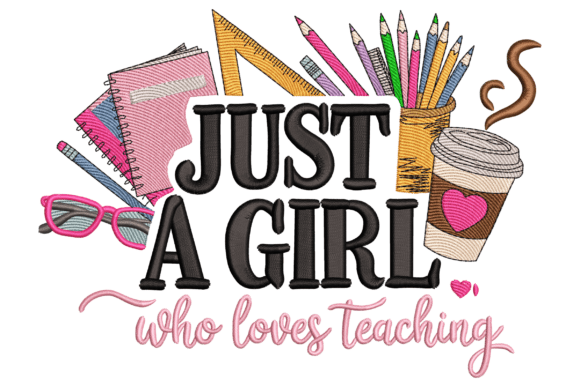
Upon loading the embroidery file into my software, the immediate impression is one of approachable professionalism. The phrase "Just a Girl Who Loves Teaching" carries a specific cultural weight; it is playful yet declarative. Visually, this type of typography-heavy design relies on balance. If the font is too rigid, it loses the "quirky flair" mentioned in the product description. If it is too loose or script-heavy, it risks becoming illegible on textured fabrics like terry cloth towels.
From a designer’s perspective, this layout suggests versatility. It does not feel overly juvenile, which makes it suitable for adult educators rather than just students. For a handmade product line, this maturity in design is crucial. It signals to the buyer that the item was curated for a professional woman, elevating the perceived value beyond generic school merchandise. The charm lies in its potential to be customized, making it an excellent candidate for personalized gifts where a name or graduation year might be added later.
Real-World Application: The Teacher Appreciation Tote
To truly evaluate this design, I mentally placed it onto a canvas tote bag design project, a staple for teacher appreciation week and back-to-school sales. In this scenario, the design needs to hold up against the coarse weave of canvas while remaining soft enough that the bag doesn't become stiff or board-like.
If this design utilizes heavy satin stitch lettering, I would advise caution on unlined tote bags. Satin stitches can pull tightly on canvas, causing puckering around the text. A better approach for this specific application would be verifying if the file uses fill stitch or redwork-style running stitch elements. Fill stitches generally lay flatter on heavy fabrics and allow for better color blending without excessive density. For commercial embroidery businesses fulfilling bulk orders for a PTA or school district, stitch-out time is also a factor. A design that achieves visual impact with optimized stitch counts will protect your profit margins while delivering a high-quality custom apparel item.
I also considered this design for sweatshirt embroidery. On fleece or French terry, the "quirky" aspect shines. However, because sweatshirts have stretch, the stabilizer choice becomes paramount. Using a fusible cutaway stabilizer is non-negotiable here to prevent the lettering from distorting after washing. If the design includes small decorative accents—like tiny pencils, apples, or hearts—ensure they are large enough to register clearly on the fuzzy texture of fleece. Tiny details often get lost in fabric texture, turning crisp graphics into muddy blobs.
Technical Considerations and Fabric Limitations
While "Just a Girl Who Loves Teaching" is marketed for t-shirts, towels, and home decor, each substrate presents unique challenges that a professional must navigate.
- Kitchen Towels and Terry Cloth: When stitching on towels, you must use a water-soluble topping. Without it, the loops of the towel will push through the stitches, ruining the legibility of the text. This design’s "charming update" promise fails if the letters are swallowed by the fabric pile.
- Stretchy Knits and T-Shirts: Lightweight knits require careful hooping. Over-tightening the hoop can cause "hoop burn" or permanent stretching. Because this design likely centers on text, any distortion in the fabric grain will make the letters look crooked. Always float delicate knits or use adhesive spray with a tear-away backing to maintain neutrality.
- Caps and Curved Surfaces: Unless this specific digital embroidery file has been digitized specifically for curved cap hoops, avoid using it on structured hats. Flat designs do not map correctly to cylindrical surfaces, leading to registration errors and gaps in the lettering.
- Dark Fabrics: Check the contrast. If the design is optimized for white or light backgrounds, the underlay may not be sufficient for black or navy garments. You may need to add an extra layer of white underlay to prevent the dark fabric from showing through lighter thread colors.
Commercial Viability for Makers and Sellers
For small shop product lines and Etsy seller portfolios, consistency is key. This design serves as a strong anchor for a collection. It pairs well with other academic motifs, allowing you to bundle items for higher average order values. However, before listing any finished product, you must verify the licensing terms. Ensure you have the right to sell physical embroidered goods versus just the digital file itself.
When creating printable mockups or digital previews for your store, accuracy builds trust. Do not simply overlay a JPEG of the design onto a stock photo. Use realistic rendering software that accounts for thread sheen and shadow. Customers buying holiday embroidery or end-of-year gifts want to see exactly what the stitch texture will look like. Misrepresenting the density or size leads to returns and negative reviews. If the design allows for personalization, showcase that capability in your listing photos. Showing "Just a Girl Who Loves Teaching" alongside a custom name demonstrates the full potential of the design assets.
Essential Pre-Stitch Checklist for Professionals
Before committing this design to a final project or client order, run through this practical verification process:
- Verify Hoop Size Compatibility: Never assume the design fits your standard 4x4 or 5x7 hoop. Measure the actual dimensions in your software. Resizing a complex text design by more than 10-15% can compromise stitch integrity and legibility.
- Test Stitch Density: Run a test sew-out on scrap fabric identical to your final project. Feel the back of the embroidery. If it feels bulletproof or stiff, the density is too high for wearable custom apparel. Consider reducing density or switching to a lighter stabilizer.
- Check Thread Color Contrast: View the design in grayscale or simulate it on both light and dark backgrounds in your software. Ensure the outline or border stitches provide enough definition so the design doesn't blend into the fabric.
- Inspect Small Details: Zoom in to 200%. Are there jump stitches that weren't trimmed? Is the spacing between letters consistent? Poor kerning in machine embroidery design files looks amateurish. Fix these issues digitally before stitching.
- Confirm Washability: If selling tea towels or baby items, wash and dry your test sample. Does the design pucker? Do the threads bleed? A charming design that ruins after one wash destroys brand reputation.
- Review Licensing for Commercial Use: Specifically check if the license covers embroidered patch production or mass manufacturing. Some licenses are restricted to small-scale handmade sales only.
Final Verdict on Production Value
"Just a Girl Who Loves Teaching" offers significant potential for makers targeting the education market. Its strength lies in its emotional resonance and clear target audience. However, its success as a commercial asset depends entirely on the maker's technical diligence. By respecting fabric limitations, optimizing stabilizer choices, and verifying file integrity, you can transform this digital concept into a premium handmade product. Whether used for a boutique sweatshirt embroidery line or a personalized teacher gift, treating this design with professional scrutiny ensures the final result honors both the craft and the customer.